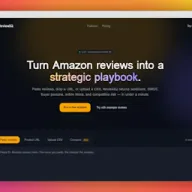
ReviewIQ
Free plan · From $29/mo
- Is it safe? We have not read the data policy of ReviewIQ yet. Read it on the official site before you upload anything.reviewiqelite.app ↗
- Is it free? Free plan · From $29/mo · pricing page, read Oct 22, 2026See ↓
- What else does this?
 Seller Assistant
 Microburbsfree
 CarScoutSee ↓
22 linking domains
Emerging
- For
- Amazon FBA sellers who want to analyse product reviews before launching or updating listings
- Price
- Free plan · From $29/mopricing page, read Oct 22, 2026
- Used for
- Compare a product's reviews against top competitor listings
- Rank fixes to make in listing, packaging or product
- Identify who is actually buying the product
- Launched on Product Hunt on May 15, 2026Product Hunt ↗
Figure and bar: visits/mo, estimate · year: online since
- #1
Seller AssistantMCP · sign-in
Checks Amazon margins, buy box share, restrictions and IP flags on supplier price lists, then builds purchase orders and runs automated repricing.
25.3kActiveFrom $29.99/mo - #2
MicroburbsMCP · open
Compares a property's asking price against comparable sales and scores suburb and street forecasts for property buyers.
2.7kActiveFrom ≈ $54/mo2014 - #3
CarScoutMCP · open
Scans nationwide dealer listings daily against saved criteria and emails a digest of new matches and price drops.
6.8kActive2025 - #4

MoneyDealsMCP · open
Lists discounted consumer tech from US retailers with 90-day price history, price-drop tracking, coupon codes and product reviews.
3.9kActive - #5

BirkinBagStockMCP · open
Indexes live pre-owned Hermès Birkin listings from resellers and owners, comparing prices and showing market price history.
2.2kActive
Not it? Say what you need
betaThree tools from the Atlas for the job you describe, each with what fits and what does not.
No notes yet. What do you use ReviewIQ for?
Sign in to leave a noteWhat is ReviewIQ?
Analyzes Amazon product reviews pasted, linked or uploaded as CSV, producing sentiment scores, SWOT and buyer persona. It is listed in the Atlas under Commerce.
Who is ReviewIQ for?
Amazon FBA sellers who want to analyse product reviews before launching or updating listings
How much does ReviewIQ cost?
ReviewIQ has a free plan; paid plans start at $29/mo, per its pricing page on 2026-10-22.
Is ReviewIQ free?
Yes, ReviewIQ has a free plan, per its pricing page on 2026-10-22.
Do people use ReviewIQ?
Emerging.
How we read a tool
No votes, no reviews, no vendor claims. Every week a crawler reads each tool's own site and a few public registries, and the words on the card are bands over what it read.
- Use: visits to the site (estimated), installs from npm and PyPI, presence in Chrome's usage report.
- Activity: the newest release on GitHub, npm or PyPI; the newest dated page on the site; open roles on a public jobs board.
- Price: the vendor's own pricing page, read with the date. A figure is printed only when it is on that page.
- The line and the use cases are written by us from the homepage, one tool at a time, and refused when they repeat the vendor's marketing.
How AI assistants read each site — the reading vendors ask us about — is on each tool's own visibility page.
How we read every tool → · By INITE Atlas Desk
Before we count this visit
Analytics and ad measurement tell us which pages and which of our ads do their job: Google Analytics and Google Ads, the Meta pixel, Yandex Metrica, and one first-party id of our own. Nothing is stored until you answer, and declining changes nothing about the site.